AgentCrafts
Open to new work · one project at a time

AI agents that finish the work, not the demo.

An agent is only useful once it survives a Tuesday.

I build autonomous agents and the unglamorous parts around them: research that returns real sources, tool calls that fail loudly, approvals before anything irreversible, and a spend cap that holds when something loops. If your team is stuck on something that half works, that is a normal place to start.

The limits I hold myself to

  • 01One project at a time
  • 02Written scope before code
  • 03Evals before your customers
  • 04A spend cap on every agent

These are limits I put on myself, so the work still holds up six months after handover. They are not a price list for you, and asking for a call costs nothing.

Project enquiryOpen now

Tell me what your team does by hand

One workflow, described plainly. You will get a straight answer on whether an agent is the right tool for it.

Goes to my inbox and is saved, so nothing gets lost. You'll normally hear back within one business day.

Shipping record

The last 30 things I shipped

25in progressOne entry per shipped unit of work: a connector, an evaluation set, a rollout, a fix that stopped an agent wasting money. Not a highlight reel.
Entry 01Today
  • 24Spend ceiling that halts a run mid-loop instead of warning about itThis week
  • 23Hybrid retrieval so exact part numbers stop returning near-missesLast week
  • 22Approval gate moved into Slack, out of a web form nobody opened2 weeks
  • 21Evaluation set of 180 real tickets, run on every prompt change3 weeks
  • 20Dead-letter queue with replay, after a silent webhook failure3 weeks

The argument

What you get from a person that a platform can't sell you

Not a subscription with a dashboard. A system scoped to your workflow, built in the open, and handed over with the reasoning intact.

The boring parts, done properly

Planning loops, typed tools, retries, dead-letter queues, approval gates and a log of every step. Nobody demos this and it is the difference between something you can leave running and something you have to babysit.

Built to last

Cheap to run on purpose

A hard spend ceiling on every run, the cheapest model that passes the evaluation, and caching where it earns its keep. You see the running cost before launch, not on the invoice afterwards.

Capped in code

Yours to keep

Code, prompts, infrastructure and written documentation, handed over at the end. Bring it in house, hand it to your team, or keep me on. Nothing is trapped behind a vendor account.

Full handover

The kind of thing I build

Real workflows, pulled straight from the tools they run in.

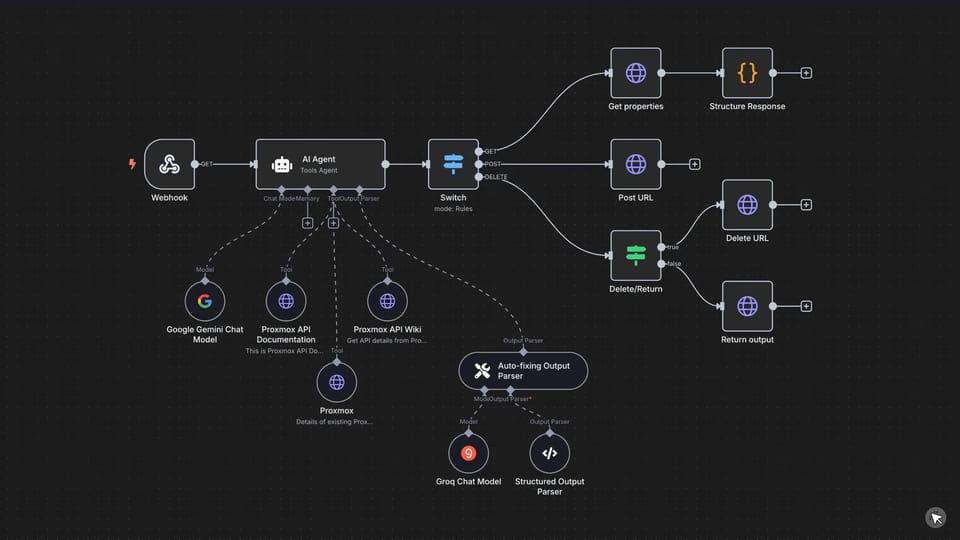
Agent workflow that reads a request, picks the right tool, then creates, edits or deletes a record through an API
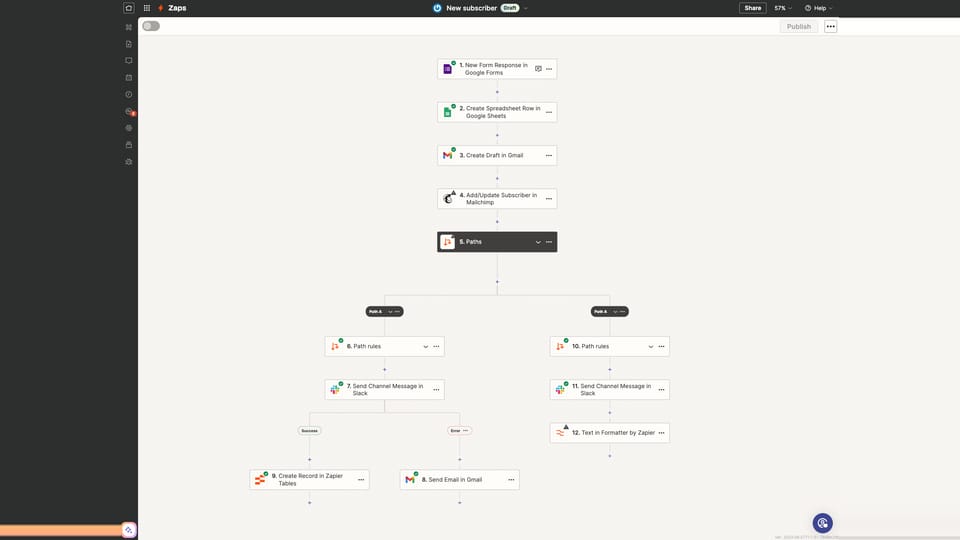
Zapier workflow that turns a form response into a spreadsheet row, a draft email and a mailing list entry, then routes it to Slack
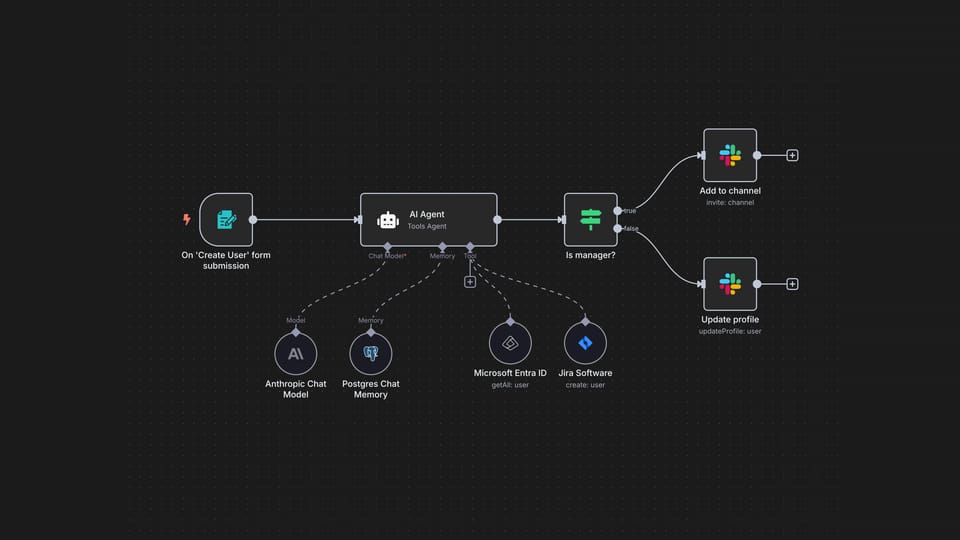
Onboarding workflow that checks whether a new starter manages a team, then invites them to a channel or updates their profile
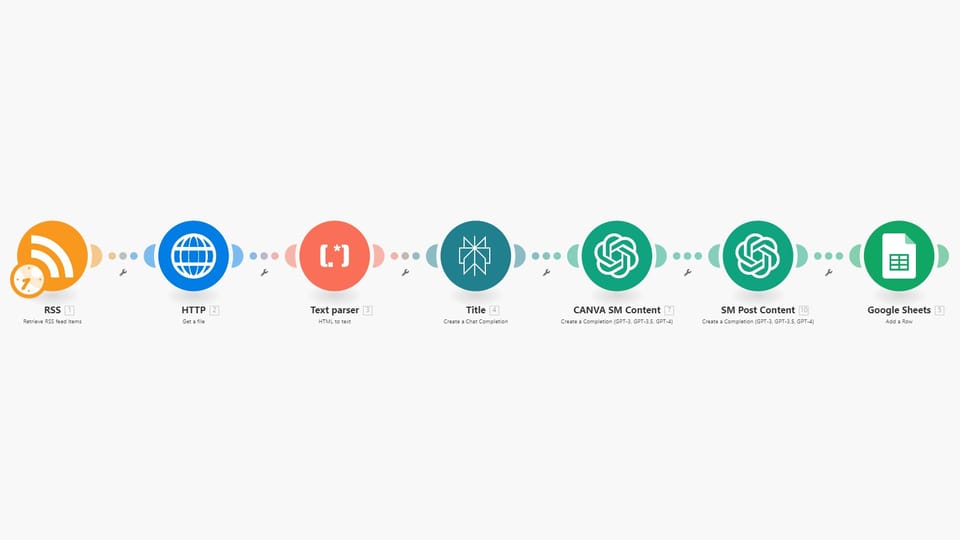
Content workflow that reads a feed, cleans up the text, writes the post and files the result in a spreadsheet
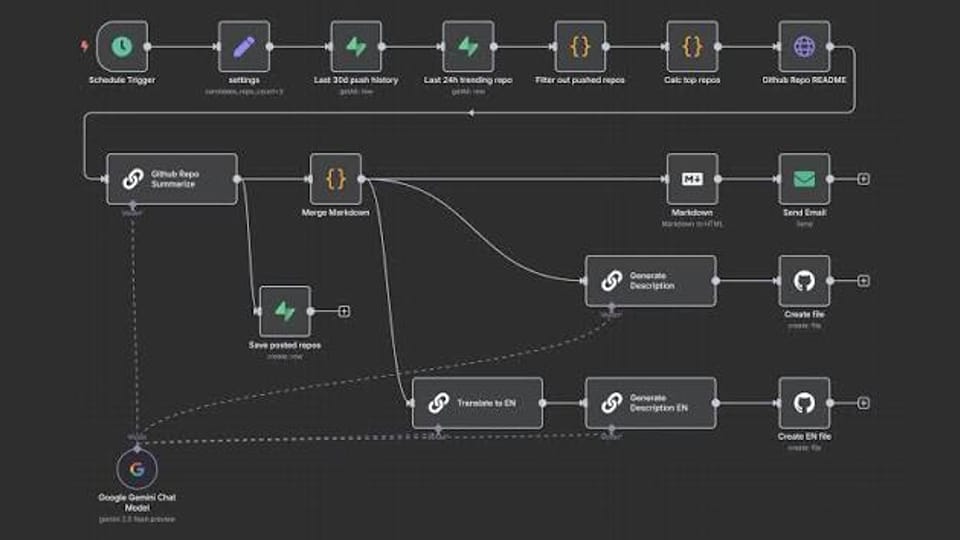
Scheduled workflow that scans trending repository activity and emails a daily digest
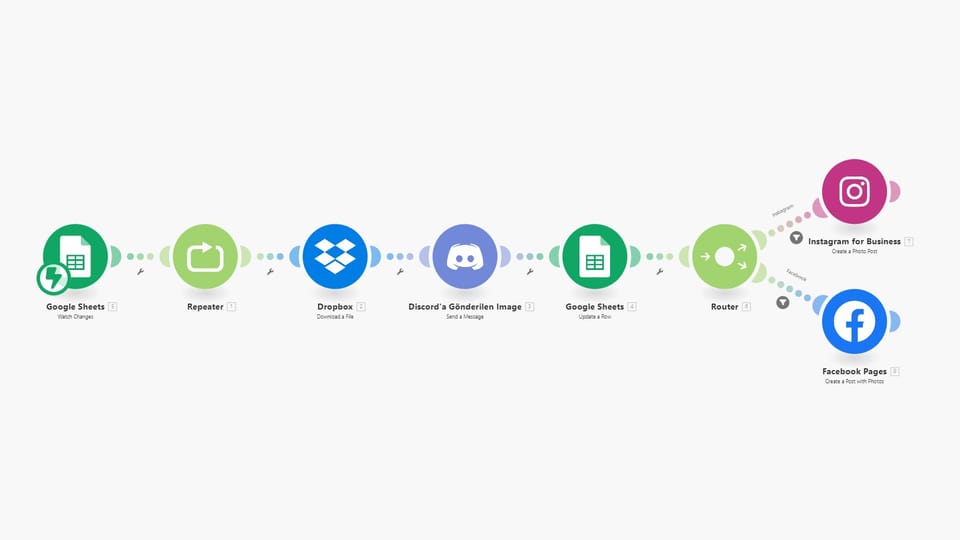
Publishing workflow that sends a single entry out to Dropbox, Discord, Instagram and a Facebook page
Scheduled workflow that scans trending repository activity and emails a daily digest
Content workflow that reads a feed, cleans up the text, writes the post and files the result in a spreadsheet
Onboarding workflow that checks whether a new starter manages a team, then invites them to a channel or updates their profile
Zapier workflow that turns a form response into a spreadsheet row, a draft email and a mailing list entry, then routes it to Slack
Agent workflow that reads a request, picks the right tool, then creates, edits or deletes a record through an API

Selected work

Three systems, three boring problems

The unglamorous work is where agents earn their keep: an inbox nobody wanted, a report that ate a week, a wiki that had no search.

Revenue operations

Inbox-to-CRM agent

Inbound email gets read, the sender enriched, the CRM updated, and a reply drafted for a human to approve or rewrite.

The inbox went from a queue people avoided to a review screen. Records land in the CRM the same day and nothing sends without a person pressing the button.

LangGraphNext.jsPostgresSlack

Read the full write-up

Content operations

Research crew

Four specialised agents brief, draft, check and format long-form research, with sources cited throughout.

A multi-day cycle became a supervised few-hour job. Unverified claims now come back flagged instead of quietly landing in the final draft.

CrewAIpgvectorMCPTypeScript

Read the full write-up

All projects and outcomes

How it goes

From a call to something running

No discovery theatre and no two-month silence. Here is the actual shape of a project.

01

A call, not a form

Thirty minutes on what your team does by hand each week, what data exists and what would count as a win. If an agent is the wrong answer, I'll say so on the call.

02

Written scope

You get the plan in writing: what gets built, which tools it touches, where approvals sit, what it costs to run and what it does when things go wrong.

03

Build in weekly slices

Something ends up working in the first week or two. You see progress every Friday instead of waiting for a reveal at the end.

04

Ship, then tune

Rollout behind a flag on real traffic. We watch cost and quality, fix what the real world breaks, and only then talk about adding more.

Who is behind this

One person, deliberately

AliAli, the developer behind AgentCrafts

Connected to systems teams already use

I'm Ali, an independent developer, not an agency, and I choose that on purpose: you talk to the person writing the code. Before this I built ordinary software products, which is why the agents I ship have real interfaces, real error handling and documentation someone can follow. The interesting problem is almost never the model. It is the workflow wrapped around it.

64+

Agents in production

30+

Systems connected

4 yrs

Shipping with LLMs

1 day

Typical reply time

Tooling

The stack I reach for

Chosen per project, not per habit. The model layer stays swappable so a price change or a better release never means a rewrite.

Agent frameworks

LangGraphLangChainCrewAIOpenAI Agents SDKAutoGenMCP

Models

OpenAIClaudeGeminiLlamaMistralOpenRouter

Image generation

GPT ImageNano BananaGrok ImagineMidjourneyFLUXIdeogramRecraftComfyUI

Video and avatars

RunwaySoraVeoKlingPikaHailuoHiggsfieldHedraTopazCapCutDaVinci ResolveReplicate

Voice and telephony

VapiElevenLabsTwilioDeepgramAssemblyAILiveKitCartesiaCall transfers

Websites

Next.jsVercelWebflowFramerTailwind CSSLovableShopifyWordPress

Blog and content

GhostSanityContentfulStrapiMediumWordPress

Automation

n8nMakeZapierTemporalWebhooksJob queues

Data and retrieval

SupabasePostgresQdrantpgvectorPineconeHybrid search

Lead capture

ApifyFirecrawlPlaywrightPuppeteerPipedriveAttioEnrichmentDuplicate checks

CRM and pipelines

HubSpotZohoSalesforceNotionAirtableLead scoring

Marketing and reporting

Google AnalyticsGoogle AdsTag ManagerAhrefsSemrushPostHogGrafanaMetabase

Messaging and support

WhatsAppGmailSlackDiscordTelegramIntercomZendeskMailchimp

Social platforms

InstagramFacebookLinkedInXYouTubeTikTokThreadsPinterestRedditBuffer

Payments and operations

StripeGoogle SheetsCalendlyRetoolBrevoResend

Engineering and monitoring

TypeScriptPythonFastAPIDockerGitHub ActionsLangSmithLangfuseStreamlit

Straight answers

The questions I get asked most

What does an AI agent developer actually do day to day?

I turn a workflow into a working system. That means picking the right model for each step, writing the agent's planning loop, connecting it to your tools and data, deciding where a human has to approve something, then building the screen your team uses and the monitoring that tells us when it drifts.

How is an agent different from using ChatGPT?

Asking a chat window is a one-off conversation that you have to drive. An agent runs on its own schedule, decides which steps to take, calls your systems, handles the result and either finishes or asks for help. The valuable part is that it keeps going without you retyping context.

Which models and frameworks do you use?

Whichever suit the job. Most often Anthropic or OpenAI models orchestrated with LangGraph or CrewAI, retrieval through pgvector or Pinecone, and integrations over MCP, webhooks or n8n. I deliberately keep the model layer swappable so a price change doesn't force a rewrite.

How long does a project usually take?

A single agent tied to one workflow is typically two to four weeks. Multi-agent systems with custom retrieval and an approval interface run four to eight. You see something working in the first week or two, and there is a written scope before anything starts.

Can it connect to the tools we already use?

Almost always, yes. If a system has an API, a webhook or a dependable export, it can become a tool the agent uses. Recent work has connected CRMs, helpdesks, shared inboxes, spreadsheets, internal databases and Slack.

What stops an agent from doing something stupid or expensive?

Typed tools that reject bad input, least-privilege credentials, approval gates on anything irreversible, hard limits on tokens and spend per run, and a log of every step so we can see exactly what happened. Failures are designed for up front rather than discovered later.

Do you support it after launch?

Yes, either as a monthly partnership or a defined support window. In practice that means watching real traffic, tuning retrieval and prompts, keeping costs in line and adding capabilities as usage patterns emerge. Full handover with documentation is available if you would rather run it in house.

Can you take over an agent or an automation someone else started?

Yes, and it is one of the most common ways work starts here. I read what exists, run it, and tell you plainly whether it is worth repairing or cheaper to rebuild. You get that answer before any build work begins, so you are not paying to find out.

We tried this ourselves and got stuck. Can you help?

That is most of the work I take on. Half-built pipelines, prompts that worked last month, an agent that loops or costs more than it saves, a workflow nobody has time to finish. Send over what you have and I will tell you what I would do and what it would take.

What if my idea isn't a good fit for an agent?

I'll tell you. Some problems are better solved with a script, a form or a process change, and I'd rather say that early than bill you for something fragile. The call is free and there's no pitch.
Let's build

Worth a thirty minute call?

Tell me what your team does by hand every week. I'll tell you honestly whether an agent is the right answer, what it would take, and roughly what it costs to run.